
Welcome to our Weatherstack Blog!
Dive into our content and discover the most recent Weather Data API updates, tools, strategies, and much more.
RECENT POST
TOP POST
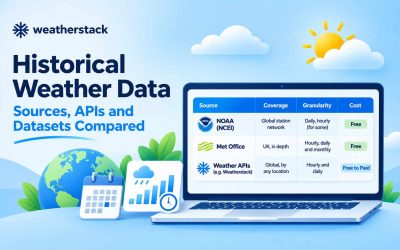
How to Get Historical Weather Data: Sources, APIs and Datasets
Historical weather data comes from three places: free government archives such as NOAA's Climate Data Online and GHCN-Daily, national weather services such as the UK Met Office, and weather APIs that return past weather by city, zip code or coordinates. Archives go...
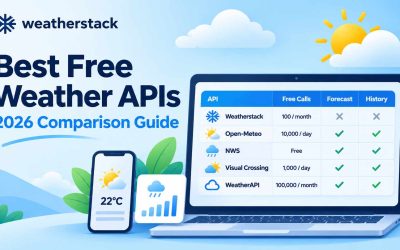
The Best Free Weather APIs in 2026, Compared
The best free weather API depends on the project. Open-Meteo offers the most free calls and needs no key, but its free tier is non-commercial. WeatherAPI.com gives 100,000 calls a month with commercial use allowed. The US National Weather Service API is free and...
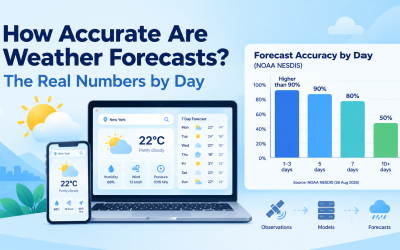
How Accurate Are Weather Forecasts? The Real Numbers by Day
According to NOAA, a 5-day weather forecast is accurate about 90% of the time, a 7-day forecast about 80% of the time, and a 10-day or longer forecast only about half the time. Forecasts for the next one to three days are the most reliable, and skill for specific...
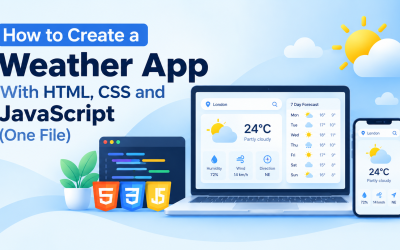
How to Create a Weather App With HTML, CSS and JavaScript (One File)
You can build a weather app using HTML, CSS and JavaScript in a single file: an HTML form for the city, a short style block, and a script that sends one fetch request to a weather API and writes the temperature, conditions, humidity and wind into the page. No Node.js...
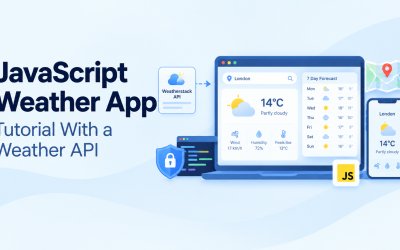
JavaScript Weather App Tutorial: Build One With a Weather API
To build a weather app in JavaScript, call a weather API such as Weatherstack from a small Node.js proxy that holds your API key, then fetch that proxy from the browser and render the JSON (temperature, conditions, wind, humidity) into HTML. This tutorial builds the...

Harnessing the Power of the Best Free Weather API for Dynamic Web Applications
Incorporating live weather data into web applications enables developers to create more interactive and user-centric experiences. But how can developers integrate real-time weather data into their applications effectively? How they can do it smoothly? The solution...